The lawsuit alleges that ChatGPT failed in its advice to a Texas teen regarding a supplement-medicine mixture, leading to the teen’s death.
19
31Save
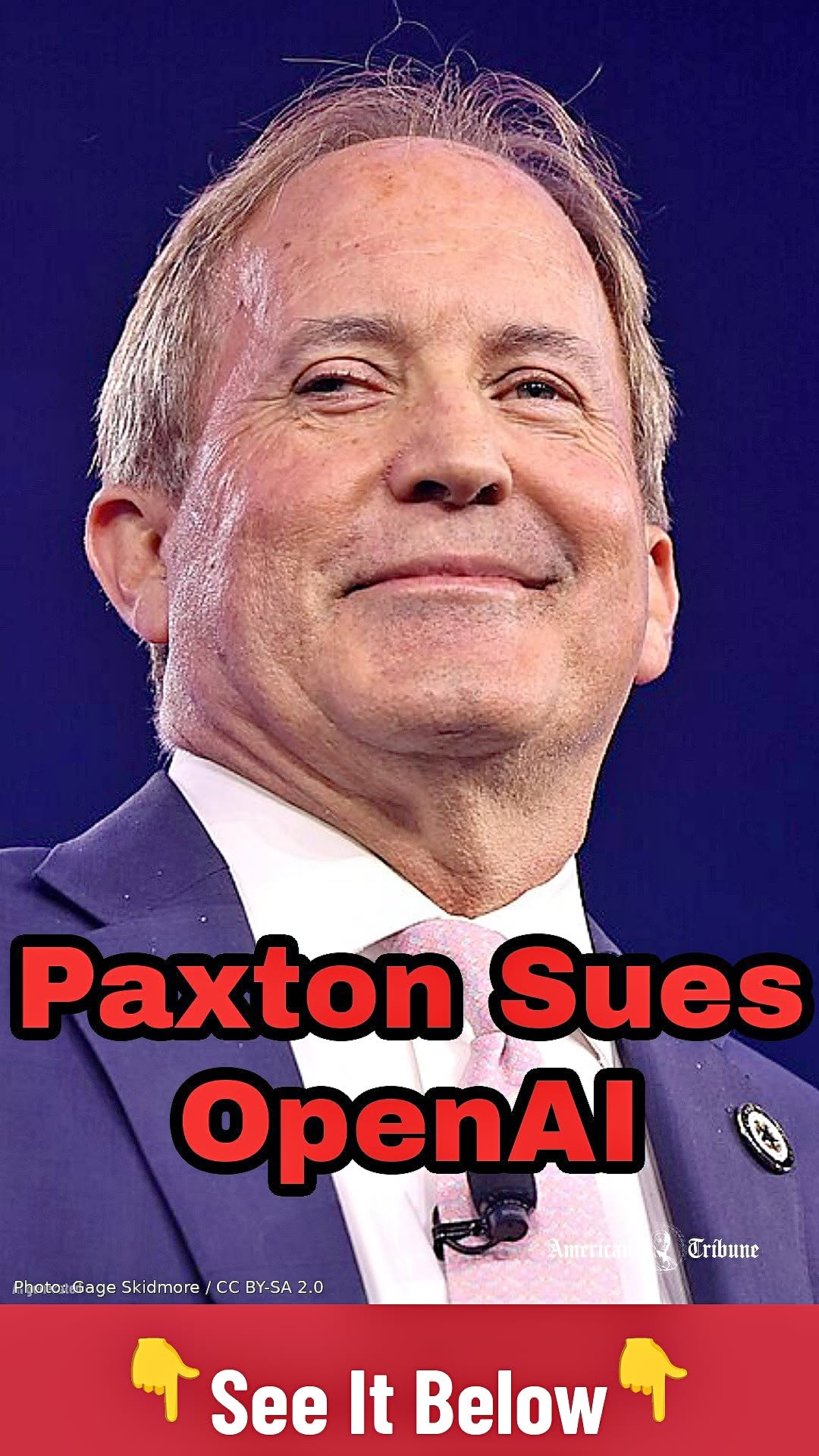
Texas Attorney General Ken Paxton has filed a lawsuit against ChatGPT parent company OpenAI, CEO Sam Altman, and affiliated entities, accusing the company of supplying incorrect or dangerous information that has led to fatal consequences.
The Oct. 23 lawsuit, filed with the District Court of Collin County, Texas, alleges that ChatGPT’s advice on health-related issues have had deadly consequences, and that the chatbot’s answers have aided mass shooters in deadly rampages, along with encouraging people to make suicide attempts.
The lawsuit cited the death of a Texas teen last year after ChatGPT allegedly advised it was safe to take kratom, a psychoactive herbal substance, together with Xanax, an anti-anxiety medication. When the teen asked about mixing the drugs, the chatbot allegedly never suggested that such a combination could be fatal, the complaint said.
The Epoch Times reached out to OpenAI for comment but did not receive a response by publication time.
The lawsuit also cited the 2025 school shooting incident at Florida State University that resulted in the deaths of two individuals and injuries to six others. ChatGPT allegedly explained to the suspected shooter how to operate a Glock handgun, which was later used in the shooting, the complaint said.
Florida Attorney General James Uthmeier launched a criminal investigation into OpenAI in April this year over the shooting incident. At the time, an OpenAI spokesperson said in an email to The Epoch Times that the company was not responsible for the incident.
The shooting incident “was a tragedy, but ChatGPT is not responsible,” the spokesperson said. “After learning of the incident, we identified a ChatGPT account believed to be associated with the suspect and proactively shared this information with law enforcement.”
Paxton’s lawsuit also highlighted a 16-year-old boy’s suicide following extensive conversations with ChatGPT. When discussing his suicidal thoughts, the chatbot responded that it wouldn’t “try to talk you out of your feelings” and even wrote a suicide note for the boy, the complaint alleged. In addition, ChatGPT also allegedly volunteered information that would assist the teenager in committing suicide.
The lawsuit alleges that ChatGPT is “not reliable or trustworthy.” It cited a review of 47,000 ChatGPT conversations, conducted by The Washington Post, that found the AI made unsupported claims including that school shootings were a tool of the deep state and that child adoption systems were being used by those in power to experiment with and breed future generations.
“With the rapid advancement of AI technology, OpenAI has the responsibility to protect users and warn them of the many dangers of its platform,” Paxton said in an Oct. 23 statement. “I will fight to protect Texans from the harms of AI and ensure that powerful technology companies are not above the law.”
The lawsuit accused OpenAI and Altman of failing to warn Texas citizens about the dangers posed by their services, thus violating the Texas Deceptive Trade Practices-Consumer Protection Act. They have also allegedly operated their digital service in a way that violates the Securing Children Online through Parental Empowerment (SCOPE) Act, the lawsuit said.
The lawsuit is seeking to compel OpenAI to comply with obligations under the Deceptive Trade Practices-Consumer Protection Act and the SCOPE Act.
Data Collection
The SCOPE Act is a Texas law that requires digital service providers to protect children under the age of 18 from harmful data collection practices.
A service provider is obligated to limit the collection and use of a child’s personal information, such as by not collecting their geolocation data or exposing them to targeted advertising. The companies are banned from sharing or selling a minor’s personal data.
“OpenAI collects private and sensitive information including information regarding Texans’ health, finances, relationships, and children” through users’ conversations with ChatGPT, the lawsuit said. “Minors have become addicted to a tool that feigns human compassion to collect their data with no parental oversight.”
According to the lawsuit, while ChatGPT has some level of parental controls, OpenAI does not require children’s accounts to be linked to a parent’s account. Moreover, ChatGPT allegedly does not send reports of a child’s activity to parents or alert them when the child accesses concerning content unless parents link their account, and even then only for limited situations.
This runs contrary to the SCOPE Act, which mandates that “verified parents be allowed to control known minors’ privacy and account settings, and provide a means of monitoring and limiting the amount of time known minors spend using ChatGPT,” the complaint reads.
According to the OpenAI website, ChatGPT offers various parental controls that enable parents to manage certain settings and receive safety notifications in some circumstances. To do so, parents must first link their ChatGPT account to their child’s account.
Parents can reduce the sensitive content their child gets exposed to, decide whether the child has access to health information, and set times when the child cannot use the service. However, linking accounts does not give parents access to their child’s conversations, real-time activity, or chat history, OpenAI stated.
Meanwhile, multiple other states have filed lawsuits against OpenAI this month. On Oct. 14, the attorneys general of Iowa, Arizona, West Virginia, and Nebraska separately announced suing OpenAI, citing harms to children, deceiving parents, and violating state consumer protection laws. On the same day, Arkansas, Montana, and Idaho also separately announced similar lawsuits against OpenAI.
