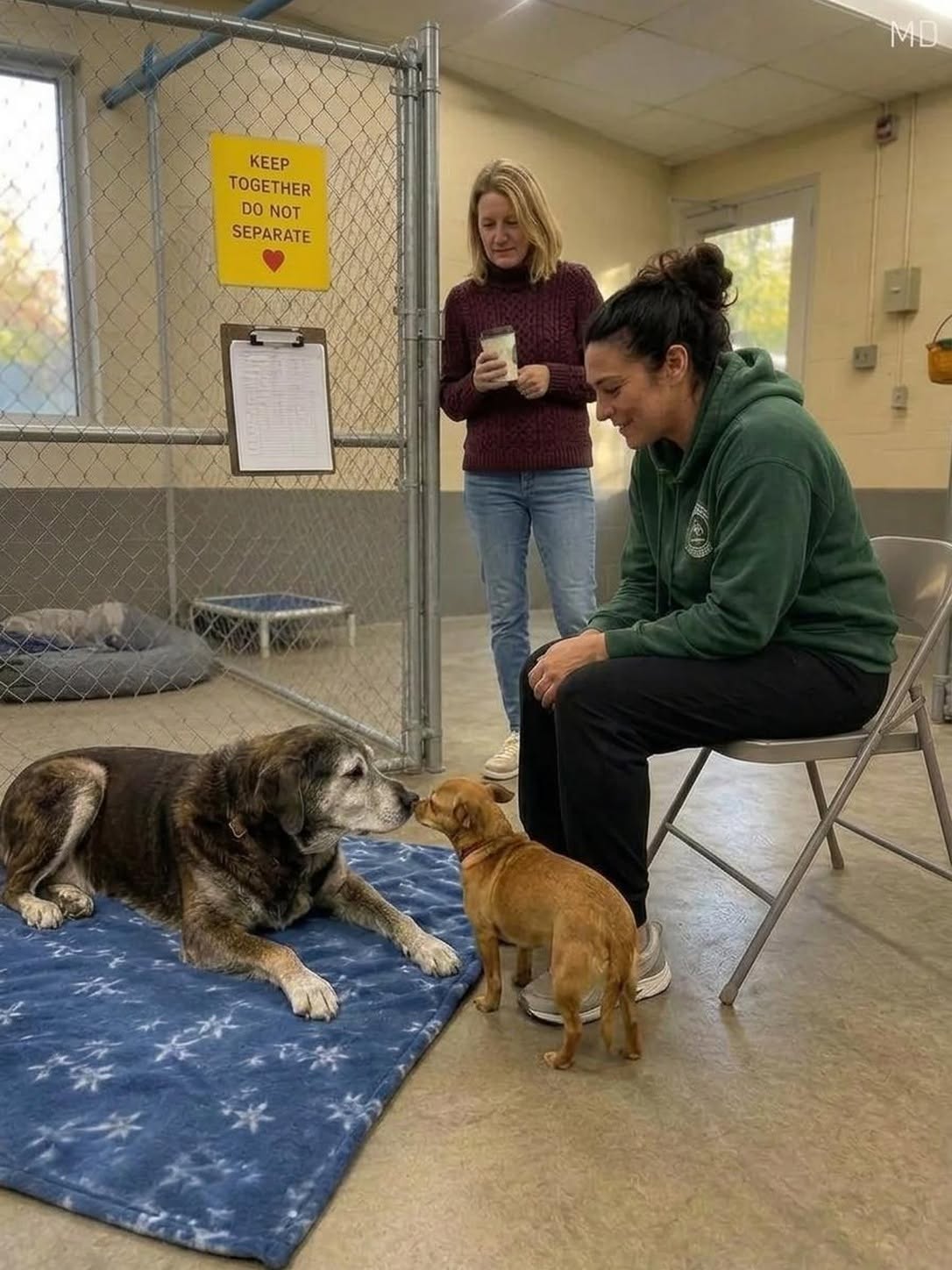
Margaret Jensen thought she was making a simple decision when she drove to the local animal shelter on a cold November morning. After years of loss and change, she wanted a small, calm dog to keep her company in the quiet house that suddenly felt much larger than it used to. Her youngest son had recently left for college, and the silence in every room seemed to remind her of how much life had changed. She carefully described the kind of pet she wanted and followed a shelter worker through rows of kennels. Several dogs seemed like reasonable choices, but none sparked the feeling she expected. Then, at the very end of the hallway, she stopped. On a worn blanket lay an elderly Great Dane named Harold, and curled tightly against him was a tiny Dachshund named Beans. They were asleep together, completely at peace, as though the rest of the world no longer mattered.
The shelter worker explained their story. Both dogs had belonged to an older man named Arthur, who had entered a long-term care facility after serious health problems. Unable to keep his pets, he had reluctantly surrendered them to the shelter. Since arriving, the pair had become known for their extraordinary bond. A handwritten note above their kennel made one thing clear: they could never be separated. Beans depended on Harold for comfort and security, while Harold seemed calmer whenever the little dog was close. Over the months, many people had offered to adopt Beans alone because he was smaller and easier to care for, but every application had been declined. Watching the two together, Margaret felt something stir inside her. She remembered the final months she had spent caring for her husband and understood, without anyone needing to explain it, what it meant to need someone simply to stay.
Although adopting both dogs would be difficult, Margaret surprised herself by signing the paperwork. The following months brought challenges she had not planned for. Harold was elderly and required extra care, while Beans became anxious whenever he could not find his friend nearby. Yet the house that had once felt empty slowly came alive again. Neighbors began stopping by with supplies and encouragement. Arthur, grateful to know his beloved companions remained together, spoke with Margaret regularly through video calls. For the first time in years, she felt connected to something larger than her own loneliness. Then, as winter deepened, Harold’s health began to decline. Margaret knew the day would eventually come, but when it arrived, she stayed beside him with Beans resting against his chest, offering comfort until Harold peacefully slipped away.
After Harold was gone, Margaret feared Beans would never recover from the loss. For days, he searched every room, returning again and again to the place where his friend had rested. Then, on the fourth evening, something unexpected happened. During the nightly news, Beans climbed onto the sofa beside Margaret and gently placed one paw on her leg. It was a small gesture, but she immediately understood its meaning. Over time, that simple act became their routine, and both began healing together. Margaret later volunteered at the shelter, sharing Harold and Beans’ story with families considering older pets. Looking back, she realized she had gone there hoping to ease the silence in her home. Instead, she discovered something far more valuable: the courage to open her heart again. By choosing two dogs that needed her, she found a renewed sense of purpose—and in the process, learned that being truly needed is one of life’s greatest gifts.
