For generations, the advice has sounded almost automatic. Eat your vegetables. Finish your greens.
Fruits & Vegetables
Discover more
healthy
Biological Sciences
Cooking
Add more color to your plate. And there is a very good reason that message has lasted.
Vegetables are important sources of fiber, vitamins, minerals, and plant compounds.
They can form an important part of eating patterns associated with better long-term health.
But there is another side of fresh produce that receives far less attention.
Food safety.
A bowl of salad can look completely harmless.
A bunch of spinach can appear fresh.
Discover more
Occupational Health & Safety
meat
Breakfast Foods
A carrot can look perfectly normal.
Health
And yet fresh produce, like other foods, can sometimes become contaminated somewhere between the farm and the plate.
Risk Management
That does not mean vegetables should be feared.
Quite the opposite.
It means they should be handled with the same basic food-safety habits people already understand for meat, eggs, and seafood.
The first thing to understand is that vegetables do not begin their journey inside a sterile environment.
Discover more
Public Safety
cooking
Cooked
They grow outdoors.
Food & Drink
They come into contact with soil.
Water.
Discover more
Herbs & Spices
Carpooling
Flora & Fauna
Animals.
Farm equipment.
Fruits & Vegetables
Workers.
Containers.
Transportation systems.
Processing facilities.
Retail shelves.
Discover more
Photograph
Meat & Seafood
Meat
And eventually, home kitchens.
Food
Every step creates an opportunity for contamination.
Most produce reaches consumers safely.
But contamination can occur.
And when it does, the germs involved are sometimes capable of causing serious illness.
Among the pathogens linked with fresh produce are certain strains of E. coli, Salmonella, and Listeria.
Leafy greens have been involved in documented foodborne outbreaks.
Discover more
Car Rentals
Time & Calendars
cook
So have sprouts.
Vehicle & Traffic Safety
Carrots.
Melons.
Herbs.
And other fresh foods.
The reason is not that vegetables are inherently dangerous.
The problem is that contamination can happen before the food reaches the kitchen.
Discover more
Biological Sciences
Occupational Health & Safety
cooked
For leafy greens in particular, bacteria may come from contaminated irrigation water, runoff, soil, animals, or other environmental sources.
Toxic Substances & Poisoning
Once harmful organisms reach the surface of a leaf, removing every single one can be difficult.
Discover more
healthy
Cooking
Cooked
Washing helps.
Food
But washing does not sterilize produce.
That distinction matters.
Running water can reduce dirt and some bacteria.
It cannot guarantee that every pathogen is removed.
That is one reason food safety has to begin long before washing.
Buying wisely matters too.
Discover more
cooking
Public Safety
food
Produce that is badly bruised, damaged, slimy, moldy, or visibly rotten should generally be avoided.
Fruits & Vegetables
Damaged areas can make it easier for microorganisms to grow.
Pre-cut produce deserves particular attention.
Once fruit or vegetables are sliced, the protective outer surface has been broken.
Moisture and nutrients become more available.
That can create better conditions for microbial growth.
So pre-cut lettuce, sliced melon, chopped vegetables, and similar refrigerated products should remain cold.
Discover more
Carpooling
Breakfast Foods
Car Rentals
Temperature is one of the most important tools in food safety.
Food
Cold temperatures do not magically kill every pathogen.
But refrigeration slows the growth of many microorganisms.
Perishable fruits and vegetables should generally be kept refrigerated at about 40°F, or 4°C, or below.
Pre-cut and packaged produce requiring refrigeration should not spend hours sitting on a warm kitchen counter.
That becomes especially important in summer.
Warm temperatures allow many bacteria to multiply more quickly.
Vehicle & Traffic Safety
The same basic rule applies to cooked vegetables and leftovers.
If cooked food will not be eaten immediately, it should be refrigerated promptly rather than left at room temperature for long periods.
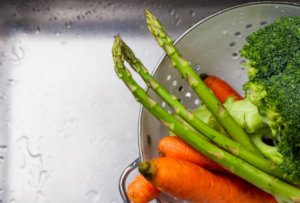
That recommendation has much stronger practical evidence behind it than many viral warnings about vegetables “turning toxic.”
Fruits & Vegetables
Discover more
Herbs & Spices
Flora & Fauna
Time & Calendars
One common internet claim says that reheating leafy greens automatically transforms their natural nitrates into dangerous nitrites.
Cooking & Recipes
The truth is more complicated.
Vegetables naturally contain nitrates.
That alone does not make them unsafe.
Under certain storage conditions, microorganisms can contribute to conversion of nitrate to nitrite.
But this is not a reason to avoid spinach or other greens.
The more useful food-safety message is simpler.
Food
Cool cooked food promptly.
Refrigerate it.
Do not leave it sitting warm for hours.
And reheat leftovers properly when they are going to be eaten.
The danger is not that spinach suddenly becomes poisonous simply because it entered a refrigerator.
Poor storage is the larger issue.
Discover more
Meat
Meat & Seafood
Photograph
Microbial contamination is another.
Food & Drink
And that brings us to one of the most serious, though uncommon, complications associated with contaminated produce.
Certain strains of E. coli produce Shiga toxin.
These infections can cause severe abdominal cramps.
Diarrhea, sometimes bloody.
Vomiting.
And occasionally fever.
Fruits & Vegetables
Most people recover.
But a minority develop a serious complication called hemolytic uremic syndrome, or HUS.
HUS can damage the kidneys.
It may cause kidney failure.
And it requires medical attention.
That is one reason severe illness after eating should not simply be dismissed as an upset stomach.
Discover more
meat
cook
Occupational Health & Safety
Food poisoning can sometimes become much more serious.
Cooking & Recipes
This does not mean a person who feels nauseated after salad has kidney failure.
Most gastrointestinal illnesses do not progress that way.
But certain warning signs deserve attention.
Very little or no urination.
Bloody urine.
Severe weakness.
Unusual bruising.
Persistent vomiting.
Food
Bloody diarrhea.
High fever.
Or signs of serious dehydration should not be ignored.
Repeated vomiting and diarrhea can also cause dehydration.
Severe dehydration itself can reduce blood flow to the kidneys and contribute to acute kidney injury.
So kidney complications after foodborne illness can arise through more than one pathway.
That is why staying hydrated matters during ordinary gastrointestinal illness.
But if someone cannot keep fluids down, medical assessment may be needed.
Food & Drink
The amount of urine a person produces can provide an important clue.
A noticeable drop in urine output is one of the symptoms clinicians consider when evaluating acute kidney injury.
Severe weakness.
Confusion.
Nausea.
Swelling.
Shortness of breath.
Toxic Substances & Poisoning
Or chest symptoms can also occur depending on the severity and cause.
Again, these are not reasons to panic after every stomach bug.
They are reasons to recognize when a situation has moved beyond ordinary discomfort.
Prevention begins with surprisingly basic habits.
First, wash your hands.
Before preparing produce, wash with soap and running water.
Do the same afterward.
Food safety can fail even when the vegetables themselves arrived clean.
A cook can contaminate produce through dirty hands.
Vehicle & Traffic Safety
A cutting board can do it.
A knife can do it.
A countertop can do it.
That is why kitchens matter as much as farms.
Cross-contamination is one of the easiest mistakes to make.
Imagine preparing raw chicken.
The knife touches the meat.
Then the same knife slices tomatoes for a salad.
Fruits & Vegetables
The tomatoes may never be cooked.
Any bacteria transferred from the chicken can go directly to the plate.
The same problem can occur with cutting boards.
Plates.
Utensils.
Hands.
Or refrigerator shelves contaminated by leaking raw meat.
The solution is straightforward.
Cooking & Recipes
Keep raw meat, poultry, seafood, and eggs separate from produce that may be eaten raw.
Use separate cutting boards when possible.
Otherwise wash equipment thoroughly between uses.
And do not place ready-to-eat food onto a plate that previously held raw meat unless it has been properly washed.
Then comes washing the vegetables themselves.
Plain running water is the recommended method for most fresh produce.
Hold the fruit or vegetable under running water.
Food & Drink
Gently rub the surface.
For firm produce such as melons, cucumbers, or similar items, a clean produce brush can help remove dirt from the exterior.
Wash produce even when you plan to peel it.
That may sound unnecessary.
But a knife can transfer bacteria from the outer surface to the inside while cutting.
Melons are a classic example.
Nobody eats the rind.
Food
But a knife passes through it.
So washing the surface first reduces the chance of transferring contamination inward.
The same logic applies to many firm vegetables.
One thing you should not use is dish soap.
Produce is not a dinner plate.
Soap and household detergents are not designed to be consumed.
Fresh produce can be porous, and residues can remain even after rinsing.
Commercial produce washes are generally unnecessary too.
Fruits & Vegetables
Running water is the standard recommendation.
That point is easy to overlook because soap sounds like it should make food cleaner.
In this case, more cleaning product is not better.
Water and proper handling are safer.
Pre-washed produce creates another question.
Should a bag labeled “ready to eat,” “washed,” or “triple washed” be washed again?
Usually, it does not need to be.
Washing it again can actually create another opportunity for contamination if the sink, hands, or kitchen surfaces are not clean.
Following package instructions is often the better approach.
Sprouts require special attention.
They are unusual because the conditions used to grow them are warm and humid.
Unfortunately, those are also excellent conditions for bacteria.
If bacteria are present on the seed, they can multiply during sprouting.
Even home-grown sprouts are not automatically free of that risk.
Risk Management
That is why people at higher risk for severe foodborne illness may be advised to avoid raw or lightly cooked sprouts.
Pregnant people.
Older adults.
Very young children.
And those with weakened immune systems may need to be more cautious with higher-risk foods.
Cooking can reduce risk because adequate heat kills many harmful bacteria.
But not every vegetable is meant to be cooked.
Salad greens are often eaten raw.
Toxic Substances & Poisoning
That makes prevention before the plate especially important.
Proper refrigeration.
Good hygiene.
Careful sourcing.
And avoiding obviously damaged produce become the main defenses.
There is another category people often confuse with microbial risk.
Natural plant toxins.
Some plants naturally produce compounds that can be harmful at sufficiently high concentrations.
Cooking & Recipes
Potatoes provide a familiar example.
When potatoes are exposed to light or begin sprouting, levels of glycoalkaloids such as solanine can rise.
A green color itself is not the toxin.
But greening can be a useful warning that conditions favoring higher glycoalkaloid levels have occurred.
Very green, bitter, badly sprouted, or heavily damaged potatoes are therefore better discarded than used.
This is very different from saying normal potatoes are toxic.
Again, dose and condition matter.
Most vegetables eaten in ordinary form are safe.
Food
Problems arise under particular circumstances.
Chemical residues from agriculture create another area where people can become unnecessarily frightened.
Pesticide residues are regulated.
Washing produce can reduce dirt and some surface residues.
Peeling can reduce certain residues further, although it also removes some nutrients and fiber depending on the food.
There is no recommendation to soak vegetables in household chemicals.
Bleach should not be used on food.
Fruits & Vegetables
Dish soap should not be used.
Strong homemade chemical mixtures are unnecessary.
Sometimes the attempt to make food safer can make it less safe.
Another myth is that any vegetable that looks slightly different has become dangerous.
Appearance is useful.
But not perfect.
Slime.
Visible mold.
Food & Drink
Rot.
Bad odors.
Or extensive decay are good reasons to throw produce away.
Minor cosmetic imperfections are different.
A strangely shaped carrot is not unsafe because of its shape.
A superficial mark does not automatically mean contamination.
Food safety requires judgment.
Not perfection.
Risk Management
Storage also matters after cooking.
A pot of cooked greens should not remain at room temperature all afternoon.
Neither should vegetable soup.
Cooked vegetables can still support bacterial growth.
Refrigerate leftovers within a reasonable time.
Use shallow containers when cooling large amounts of hot food so they cool more quickly.
And keep the refrigerator properly cold.
A refrigerator slows bacterial growth.
Food
It does not stop time.
Food still spoils eventually.
Leftovers should not remain forgotten at the back of the refrigerator indefinitely.
When reheating cooked leftovers, heat them thoroughly.
Repeated cycles of warming, cooling, leaving food out, and warming again create more opportunities for microbial growth.
So it is often better to reheat only the portion you intend to eat.
That advice applies to vegetables just as it does to many other foods.
Fruits & Vegetables
Then there is the kitchen sink.
It looks clean.
It may not be.
Raw meat juices.
Soil from vegetables.
Dirty dishes.
Hands.
Sponges.
And cloths can all move bacteria around.
Vehicle & Traffic Safety
A washed vegetable placed back into a dirty sink can become contaminated again.
That is another reason food safety is a process rather than one magical washing step.
The refrigerator has similar hidden risks.
Raw meat should be stored so juices cannot drip onto produce below.
Containers should be closed.
Spills should be cleaned.
And produce that needs refrigeration should not be left in warm door compartments if the temperature is unreliable.
Cooking & Recipes
Food safety is built from dozens of small decisions.
None feels dramatic.
Together, they matter.
This also explains why home-grown produce is not automatically safer than store-bought produce.
A backyard garden can still be exposed to animal feces.
Unsafe water.
Improper compost.
Or dirty hands.
Food
Home-grown vegetables should still be washed.
Likewise, produce purchased from a farmers’ market should be handled using the same basic safety rules.
“Local,” “organic,” and “home-grown” describe how or where food was produced.
They do not mean sterile.
The same applies to packaged vegetables.
Packaging does not guarantee that contamination is impossible.
Food producers use many safety systems.
But no system can reduce risk to zero.
Fruits & Vegetables
That is why outbreaks occasionally occur even with professionally grown and packaged produce.
The good news is that severe foodborne illness remains relatively uncommon compared with the enormous amount of produce consumed every day.
Millions of servings of vegetables are eaten safely.
That perspective matters.
A frightening news story can create the impression that vegetables are suddenly dangerous.
They are not.
The nutritional benefits of plant-rich diets remain substantial.
Vehicle & Traffic Safety
The lesson is not “stop eating greens.”
It is “handle greens safely.”
And this is where the payoff becomes clearer.
People often treat vegetables as though they belong to a completely different food-safety category from meat.
Raw chicken feels dangerous.
Lettuce feels harmless.
But pathogens do not care how healthy a food looks.
If contamination occurs, a nutritious food can still carry harmful microorganisms.
Risk Management
That does not remove its nutritional value.
It simply adds another responsibility.
Wash your hands.
Rinse fresh produce under running water when appropriate.
Keep raw meat separate.
Refrigerate perishable produce.
Discard rotten or heavily damaged food.
Cook when appropriate.
Food
Handle leftovers properly.
And pay attention to serious symptoms.
Those habits are simple.
They also address the risks that matter most.
The internet often makes vegetable safety sound more mysterious than it is.
Toxic nitrate transformations.
Invisible chemicals.
Dangerous reheating rituals.
Toxic Substances & Poisoning
One vegetable that supposedly damages the kidneys overnight.
Those claims create fear.
The real risks are usually much more familiar.
Bacteria.
Poor temperature control.
Cross-contamination.
Spoilage.
And occasionally natural plant compounds in damaged or improperly stored foods.
Fruits & Vegetables
Those are manageable risks.
And recognizing them allows vegetables to remain what they should be.
A major part of a healthy diet.
Not something to fear.
There is one final point worth remembering.
Foodborne illness does not always begin immediately after a meal.
Some illnesses appear within hours.
Others take several days.
Food & Drink
Certain infections can take even longer.
That means the last thing someone ate is not automatically the cause.
People naturally blame the most recent meal.
Sometimes the actual exposure happened days earlier.
That is another reason individual food-poisoning stories should be interpreted cautiously unless health authorities have identified the source.
A dramatic coincidence is not the same thing as proof.
If severe symptoms do develop, however, the response should not be casual.
Health
Repeated vomiting that prevents drinking.
Bloody diarrhea.
High fever.
Severe dehydration.
Little or no urination.
Blood in the urine.
Extreme weakness.
Confusion.
Or other serious symptoms warrant medical attention.
Risk Management
Kidney complications are rare.
But they are real.
That is why awareness matters.
Not fear.
A plate full of vegetables remains one of the most ordinary and valuable parts of a balanced diet.
The goal is not to question every leaf.
It is to remember that “healthy” and “safe” are two different qualities.
A vegetable can be highly nutritious.
Vehicle & Traffic Safety
It still needs clean hands.
Safe water.
Cold storage when required.
Clean equipment.
And sensible preparation.
Once that becomes routine, food safety stops feeling like another complicated rule.
It simply becomes part of cooking.
And perhaps that is the most useful lesson.
Food
We spent generations telling people to eat their greens.
The advice was right.
We just should have added one more sentence.
Handle them safely too.
